 info@elancianoreydelosvinos.es
 (+34) 91 559 53 32
The story of the fried eggs
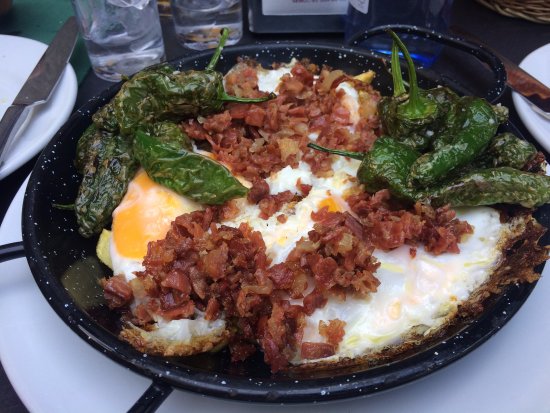
Scrambled eggs, broken eggs, or fried eggs, it doesn’t matter what you call them: it’s a unique delicacy whose origins date back to ancient times (even before we existed).
And it continues to be a typical dish in Madrid in many places (we also serve some delicious ones with ham). But… since when have they been done like this?
Probably one of the most famous references dates back to 1846. Then, the English traveler and Hispanist Richard Ford spoke about this dish in his book “Gathering from Spain.” The author described them as a gastronomic resource for humble families.
But there are those who trace this simple (and delicious) delicacy back much further in history. Specifically to 1698. Date of Velázquez’s painting “Old Woman Frying Eggs” An oil painting that many associate with a still life because, despite depicting a traditional scene, the protagonists are the same as those in this article: eggs.
Broken eggs also appear in the letters that Lope de Vega sent to the Duke of Sessa in 1612. The writer speaks of them in his 82nd letter, when he relates that “I read some verses with Cervantes’ glasses, which were like badly cooked fried eggs.”
But it is precisely to him, to Cervantes, to whom the first reference to this dish has been historically attributed:
This is the second sentence of Chapter I of Don Quixote. After explaining the origins of his ingenious gentleman, Cervantes defined him through his way of eating.
And it is here, precisely, on pages 69 and 70 of the most universal work of Spanish literature, where we find the first reference to what we know today as broken or scrambled eggs. Therefore, we could venture to say that the origin of this essential dish of our culinary culture dates back to Castile-La Mancha more than four centuries ago.
Come to El Anciano Rey De los Vinos and try them: we guarantee you’ll come back.

