info@elancianoreydelosvinos.es
 (+34) 91 559 53 32
3 truly Madrilenian Christmas icons
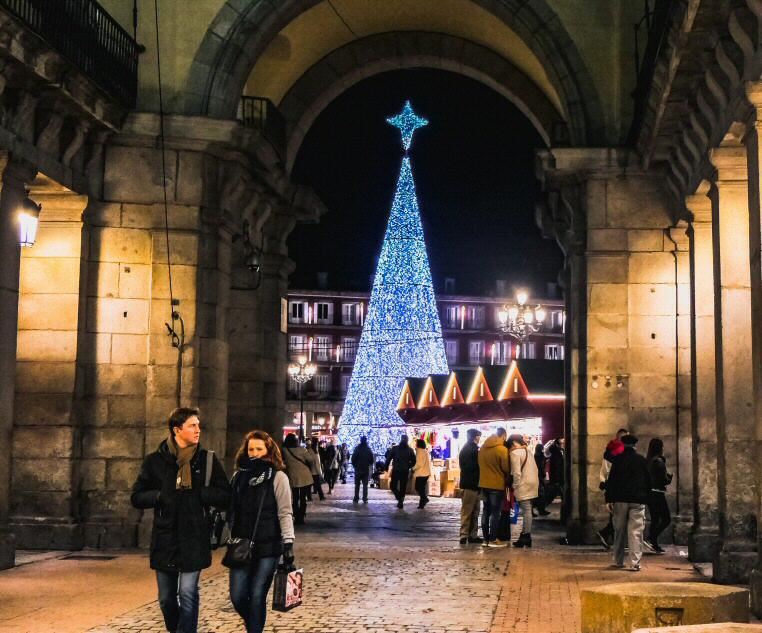
We keep talking about Christmas on our blog, and the truth is we enjoy it so much that we love indulging in these topics. Today we’ll talk about 3 Christmas icons that represent our capital during this season and make it truly unforgettable.
The origin of eating grapes
It feels like it’s been done throughout all of human history, but that’s not really the case.
Eating grapes at midnight was a bourgeois custom in early 19th-century Germany and, above all, France. In the neighboring country, they paired them with champagne to the chime of midnight bells on any day family or friends gathered. This luxurious custom soon caught on among Spanish aristocrats and the wealthy. The press reported on these somewhat despotic new trends.
In 1882, the ban on Christmas rounds with outsiders sparked a popular mockery in Sol. There, on New Year’s Eve of 1882, hundreds of locals gathered to satirize bourgeois customs and claim their legacy. A few years later, this tradition became popular throughout Spain. A tradition that is now part of our cultural heritage and has taken root in various Spanish-speaking countries.
What were the foodie luxuries at Christmas (gastronomic trends)
Madrid has always been a very gastronomic capital. Over the years, its kitchens have adapted to new trends while preserving the best of past times. In the 19th century, the press published Christmas recipes and roamed around the Plaza Mayor Market, where instead of tacky wigs you could find live turkeys or ones ready to cook with stuffing, wines, or fish.
Of course, nougat and ham had a strong presence during these dates when the city gave in to indulgence. Star dishes included sea bream, stuffed turkey, tuna from Laredo, salmon, goose barnacles, Trévelez ham, or sirloin steak. For dessert, polvorones, caramelized almonds, marzipan, and Jijona nougat were always part of the celebration.
Sparkling wines and reds, depending on how much money one had, were the preferred pairing for such delicacies. In humbler homes, the fire’s glow and the food on the table were accompanied by a Valdepeñas claret. The aristocrats chose French champagne. For many Madrilenians, it was the only night they could enjoy these products meant for the wealthy. A foodie luxury as irresistible as those that fill our abundant Christmas Eve tables.
The face of fortune: the long-awaited Christmas lottery
Doña Manolita – (1879 – 1951)
This distinguished Madrilenian is undoubtedly one of the icons of Christmas in Madrid. The lines outside her lottery shop are part of the city’s Christmas landscape. It all began in a small shop on San Bernardo Street in 1904. The four De Pablo sisters started a business whose impact on the city they could hardly have imagined. Manuela soon stood out for her charm and a trip to Lourdes.
After that visit, the lottery woman began awarding major prizes, which led her to surpass Cándido—a refined character whose short stature and mustache gave him the appearance of a lucky elf that made him famous. The business, now named Doña Manolita, moved to Puerta del Sol and then to Gran Vía, where the most famous lottery woman continued giving out prizes until her death in 1951. A symbol of good fortune that accompanies Madrilenians every Christmas.
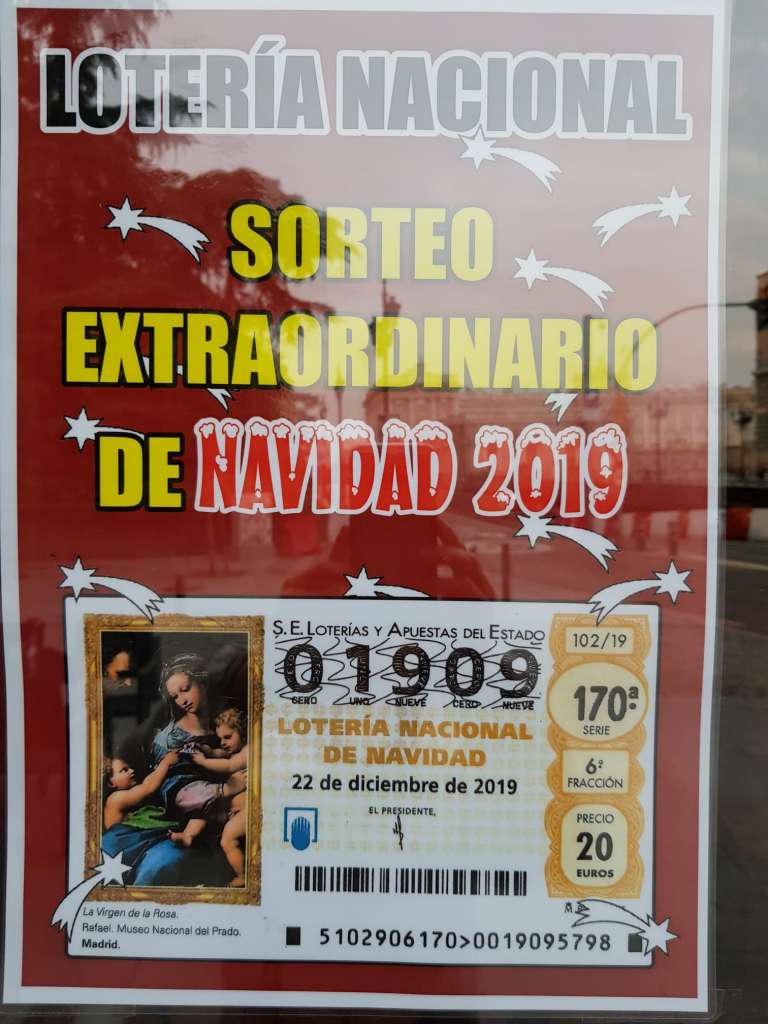
And we, by the way, have been selling for years a lottery ticket that commemorates our founding year. If you feel like it, you know—stop by our place.